


What are decodable books and passages? Why should we use them? And when should childrenstopusing decodable books?
These are all important questions that I’ll be answering in today’s blog post!
What are decodable books and passages?
Decodable texts are written to reinforce a particular phonics pattern. The vast majority of the words can be read using phonics knowledge.
I like this definition from Iowa Reading Research.
Decodable readersare texts that introduce words and word structures in a carefully planned scope and sequence. The order in which that word structure is introduced often aligns with the scope and sequence of the curriculum. In this way, students have the opportunity to apply the phonics skills they are learning and to build confidence in their abilities to read full sentences and short stories.
Iowa Reading Research

A book or passage’s decodabilitydepends on the reader. For example, if you have adecodable passage that features CVCE wordslikemakeandbike, but the reader has only learned CVC words, that passage is not decodablefor that particular reader.
Why use decodable books?
In the old days (ahem years ago), when I began teaching first grade, I was required to use a very systematic phonics program that came with a set of decodable books that I would assemble by folding and stapling.
The decodable books were awful.
They wereboring, stilted, and just plain weird.
I’m sorry to say that they turned me off to explicit phonics instruction in general, and I went on to spend years using predictable, leveled books with beginning readers in a readers workshop format.
I wish I had understood the problems with that approach.
The problems with having beginning readers read predictable, leveled books
- They get very few opportunities to apply what they’ve been taught in phonics.
- Since many of the words are not yet decodable for them, beginners have to use the picture and the first part of the word to guess at words. This trains children to use pictures rather than read through the word. It also teaches them to be comfortable guessing.
- Predictable, leveled texts can give the false appearance of fluent reading. Since students can memorize the pattern and use the pictures to “solve” words, these books can mask underlying reading difficulties.
- Even if students appear successful with these books, many of them hit a wall in third grade when books are less predictable and there is little picture support.

Why decodable books are a better alternative for beginners
- Students get many opportunities to apply the phonics skills they’ve been taught.
- Since they can decode most of the words, students gain confidence as readers.
- The more students decode a particular word, the closer they are to orthographically mapping it so that they recognize the word instantly, without needing to sound it out.
What makes a quality decodable book?
Bad decodables are out there – but wonderful new decodables are coming on the market all the time.
A quality decodable book or passage…
- Follows a solid scope and sequence,like this one
- Includes many words featuring the new sound-spelling
- Tells a story or gives useful information
- Sounds the way we talk

Decodable Books & Lessons Set 1a: CVC Words & Common Digraphs
$18.00
This is our first set of decodable books, featuring CVC words and simple digraphs. Students love the characters and stories!
Decodable texts should not be used indefinitely
The big reason we want our students to move beyond highly decodable text is that too much of it can lead to a misunderstanding about how English orthography (our spelling system) works. They need to learn that straight decoding will not always lead to the correct word. For example, if a child encounters the wordmother, she might read it as moe-thur or moth-ur, both of which are phonetically correct. But the child should recognize that this is not a real word and adjust the pronunciation to come up with the correct word: mother. This mispronunciation correction is calledset for variability.

We should also keep in mind that it’s impossible to teach all 250+ sound spellings; there simply isn’t enough time! According to David Share’s self-teaching hypothesis, students with sufficient decoding skills can figure out the rest of the code over time as they attempt to read more difficult words (words which they won’t find in highly decodable text).
Finally, nondecodable text also gives students practice with statistical learning. As they read authentic text, they will notice that some sound-spellings appear more frequently. This will help them apply phonics patterns appropriately.
When should students stop using decodable books?
Research doesn’t say, and experts have various opinions.
- Heidi Ann Mesmerbelieves that the appropriate transition is after 2-3 months of reading instruction, when students can easily blend CVC words. (I think this is too soon.)
- Linda Farrellsays that typically developing readers are ready for nondecodable text when they can read single syllable words with short vowels, digraphs and blends, and two syllable words with schwa, r-controlled vowels, and silent e – at a rate of at least 35 words per minute.
- Jocelyn Seamerbelieves that students should first learn the core 75 graphemes and read about 70-90 words per minute.
Agh! What’s a teacher to do?
Decodable books are like training wheels; we remove them when they are no longer necessary. While I think that decodable text always belongs in a phonics lesson to reinforce the new sound-spelling, I think we should encourage students to practice their reading in nondecodable text when two things are true.
First, their word identification strategy should always begin with putting their eyes on the word – not the picture or their teacher. Second, they know basic phonics skills (CVC words, blends, digraphs, CVCE words, some vowel teams, and r-controlled vowels) and can also read simple two syllable words.
Not sure? Have the student read a simple book likeHenry and Mudge,Frog and Toad, orFly Guy. If the student can read one of these books independently, they are likely ready for nondecodable text. For many students, this will be some time between the middle and end of the first grade year.
The bottom line is that there’s no simple answer. The more experienced you are, and the better you know your students’ abilities, the better equipped you’ll be to make this decision on a case by case basis.

Looking for more discussions of this topic?
- Moving away from decodable readers(Sounds-Write)
- When do you get a child off decodable books?(Reading Elephant)
- How will I know when it’s time to stop using decodable texts?(Informed Literacy)
- When should children stop using decodable texts?(PhonicBooks)
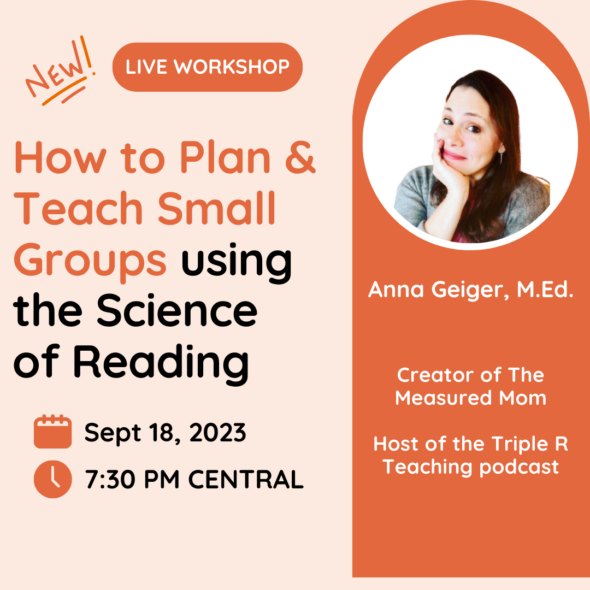
Sign up for my upcoming FREE workshop!
Free Reading Printables for Pre-K-3rd Grade
加入我们的邮件列表,把这个样本群time-saving resources from our membership site! You'll get phonemic awareness, phonics, and reading comprehension resources ... all free!


Virginia
Is there a printable version for this blog post: How do I transition out of decodable books?
Heather Santitto
Yes! I was about to ask the same thing!!!
Anna Geiger
It’s there now, Heather!
Anna Geiger
I’ve added that now!